
Customer Support
Hi! I'm here to help. Tap to start a conversation.
Hi there! Want to learn how DLS can support your research or product development? Start a conversation

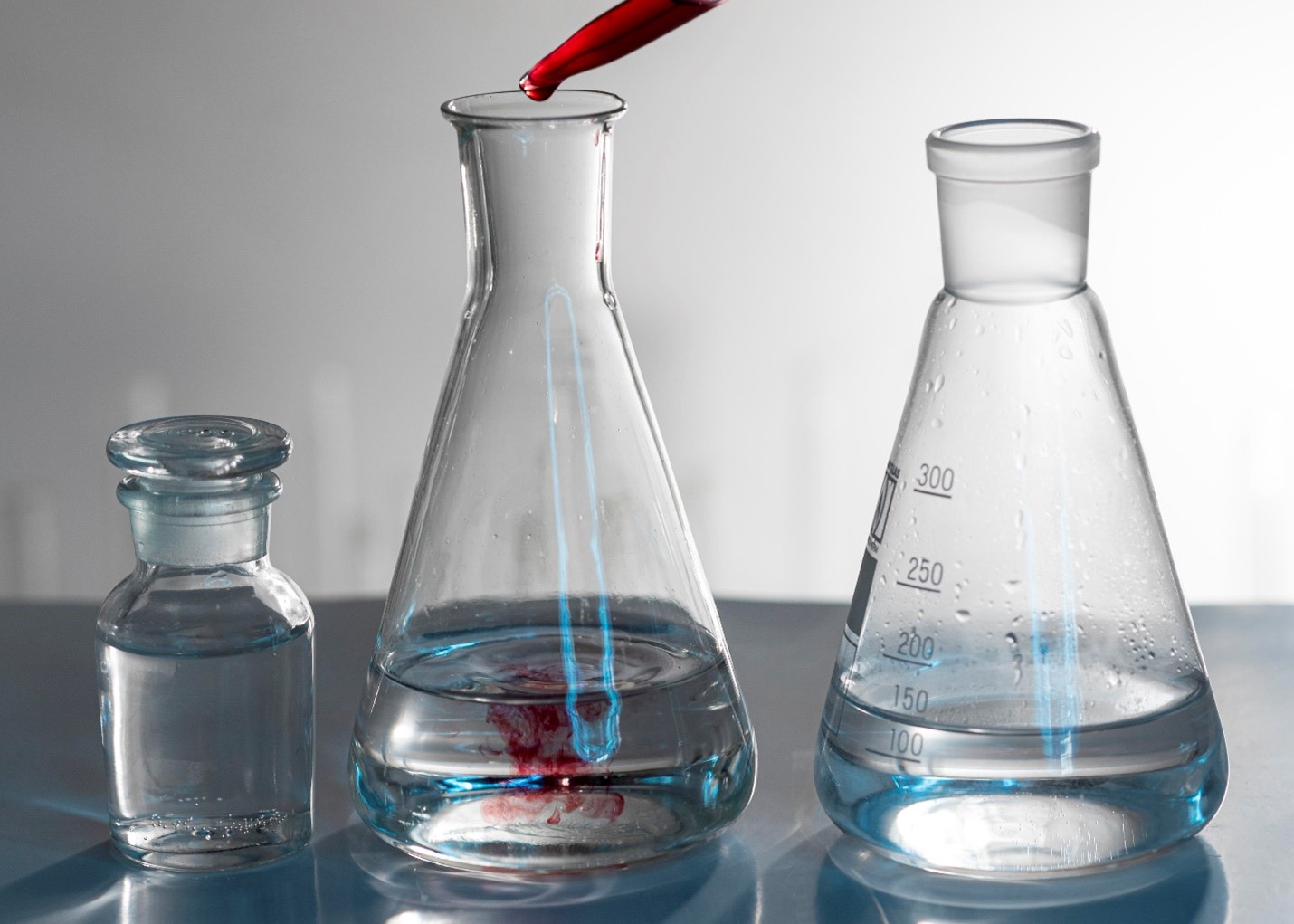
Dilution is one of the simplest steps in particle size analysis, yet it is also one of the most influential. In techniques such as Dynamic Light Scattering (DLS), dilution is often required to reduce multiple scattering and prepare a sample for reliable measurement. However, recent research shows that dilution is far from a neutral step. It can modify the microstructure of emulsions, shift droplet interactions, change diffusion behavior, and even alter the measured particle size itself.
In this article, we summarize key findings from scientific work on how dilution affects w/o emulsions during DLS analysis and translate these insights into practical guidance for scientists, formulators, and lab teams.
DLS determines particle size by measuring the Brownian motion of droplets and converting diffusion coefficients into hydrodynamic diameters. Anything that changes this diffusion behavior influences the reported size.
The evaluated study demonstrates that dilution directly affects:
Understanding these effects is essential for avoiding misleading results and ensuring consistency in nanoparticle and emulsion characterization.
The research shows that water droplets in w/o emulsions often dissolve into the continuous oil phase during dilution if the dilution medium is not water saturated.
This leads to:
At higher droplet concentrations, the droplets are much closer together, which changes how they move in the liquid. Instead of diffusing freely, they begin to influence each other’s motion, creating a kind of crowding effect. DLS interprets this slowed movement as if the droplets were larger than they actually are, which results in an inflated size reading. Nothing about the droplets themselves has grown; it is simply the interaction between nearby droplets that causes the measurement to drift upward. In practical terms, this means that if a sample is not diluted enough before analysis, the reported size may reflect these interaction effects rather than the true particle size.
The liquid you use for dilution can influence your particle size results as much as the sample itself. Some dilution liquids keep the sample stable, while others change how droplets behave the moment, they are mixed. In certain cases, part of the dispersed phase can dissolve into the surrounding liquid, making particles appear smaller than they really are. In other cases, the dilution liquid can cause droplets to interact differently, leading to measurements that look larger or less consistent. The key point is that two identical samples can produce noticeably different size readings simply because they were diluted in different ways. Choosing a suitable, stable dilution medium is essential for obtaining reliable and repeatable measurements.
When cuvettes are left open, water evaporates from the dilution medium, shifting the solubility equilibrium and causing further droplet dissolution during the measurement.
This finding is essential for labs where measurements run over extended periods.
The research shows that increasing temperature reduces the concentration dependency of diffusion, suggesting weaker droplet interactions at higher temperatures.
However, higher temperatures also:
For practical work, lower measurement temperatures are preferred for stability.
Traditional DLS workflows require heavy dilution to avoid multiple scattering and interaction effects. However, this dilution step introduces its own challenges, especially for real-world samples that contain salts, surfactants, complex interfaces, or multiphase mixtures.
New developments in optical design and AI-assisted interpretation are reducing the dependence on extensive dilution by improving sensitivity in concentrated and heterogeneous systems. These advances help maintain sample integrity, preserve the original microstructure, and minimize errors caused by dissolution or interaction effects.
Researchers and labs exploring these modern approaches can review the Nanopartizer Nanosense device, which incorporates these capabilities:
https://nanopartizer.com/product/
Dilution is not a neutral step in particle size analysis. The research shows how the choice of dilution medium, water saturation, evaporation control, concentration, and temperature all drive the accuracy of DLS measurements. Understanding these effects helps ensure reliable characterization of nanoparticles and emulsions without unintended changes to the sample.